
Introduction
Choosing the right garage door opener types can make a huge difference in noise level, durability, maintenance, and long-term cost. Whether you’re upgrading an old system or installing a new one, understanding the different types of garage door openers will help you make a smart decision.
In this complete 2026 buyer’s guide, you’ll learn how each type works, their pros and cons, price ranges, and which one is best for your specific needs.
What Are the Different Garage Door Opener Types?
When people search for garage door opener types, they want clear, updated information that helps them understand how each type works and how it fits their needs. In 2026, the main types remain the same, but modern trends emphasise quiet performance, smart features, and durability.
Here’s a concise and updated explanation of the different garage door opener types available today.
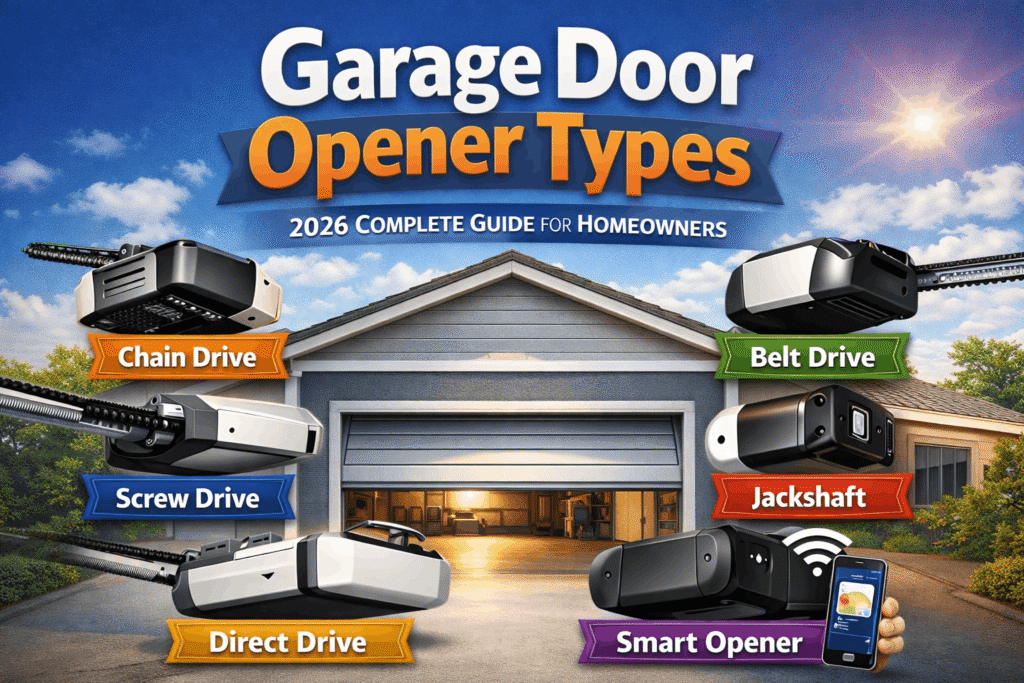
1. Chain Drive Openers
Chain drive openers use a metal chain to move the door along a rail. They are one of the oldest and most widely used garage door opener types.
Best for: Budget setups and heavy doors
Noise: Louder than other types
Update: Still popular for detached garages, but less ideal for homes where noise matters
Chain drive systems are reliable but noisy compared to newer options.
2. Belt Drive Openers
Belt-driven openers operate with a durable rubber belt rather than a traditional metal chain.
Best for: Attached garages and noise-sensitive homes
Noise: Very quiet
Update: Most common choice in 2026 for residential garages due to smooth, quiet operation
Belt drive is considered the standard modern choice for most homeowners.
3. Screw Drive Openers
Screw drive openers operate with a threaded steel rod that turns to move the door.
Best for: Moderate climates
Noise: Moderate
Update: Less popular than in the past, but still used in some regions
This type has a simple mechanical design with fewer moving parts.
4. Direct Drive Openers
In direct drive openers, the motor itself moves along the rail.
Best for: Ultra-quiet operation
Noise: Extremely quiet
Update: Increasingly preferred for homes attached to living spaces
Direct drive models have fewer moving pieces, which reduces noise and maintenance.
5. Jackshaft (Wall-Mounted) Openers
Jackshaft openers are mounted on the wall beside the garage door and operate the torsion bar system.
Ideal for: garages that have tall ceilings or restricted overhead clearance.
Noise: Quiet
Update: Gaining popularity for contemporary home designs
These systems free up ceiling space and offer clean installation.
6. Smart Garage Door Openers
Smart openers connect to Wi-Fi and allow remote control through an app.
Best for: Connected homes
Features: Remote control, alerts, voice assistant integration
Update: Smart capabilities are now common across most garage door opener types.
Smart technology has become a key point in recent searches for garage door opener types.
Garage Door Opener Types Comparison Table
When evaluating garage door opener types, a clear comparison helps you quickly see the differences in noise, cost, maintenance, and ideal use. This updated comparison reflects modern trends like quieter performance and smart technology integration. Below is an easy-to-read table followed by key takeaways.
Comparison Table for Garage Door Opener Types
| Garage Door Opener Type | Noise Level | Maintenance | Cost Range | Best Use | Smart Features |
|---|---|---|---|---|---|
| Chain Drive | Loud | Moderate | Low | Detached garages | Often available |
| Belt Drive | Very Quiet | Low | Medium | Attached garages | Common |
| Screw Drive | Moderate | Moderate | Medium | Stable climates | Less common |
| Direct Drive | Ultra Quiet | Very Low | Medium – High | Noise-sensitive homes | Increasing |
| Jackshaft (Wall-Mounted) | Quiet | Low | High | High ceiling or limited ceiling space | Available |
| Smart Openers (any type) | Varies | Low | Medium – High | Connected homes | Standard |
Quick Overview: What This Table Tells You
- Noise Level:
- Quietest options: Direct drive and belt drive — ideal for attached garages and living spaces above.
- Loudest: Chain drive — acceptable if noise isn’t a concern.
- Maintenance:
- Easiest: Direct drive models have the fewest moving parts.
- Moderate: Chain and screw drive may need periodic checks and lubrication.
- Cost Range:
- Budget-friendly: Chain drive options.
- Premium: Jackshaft and direct drive units, often with advanced features.
- Smart Features:
- Wi-Fi connectivity, app control, and voice assistant compatibility are now common across most garage door opener types, especially in 2026. Smart capabilities are no longer limited to premium products.
How to Use This Comparison
To choose the right garage door opener type:
- Consider noise:
If you regularly hear your garage from living areas, prioritise quieter types like belt or direct drive. - Think about space:
If you have limited ceiling space, jackshaft openers solve the overhead problem. - Budget accordingly:
Chain drive offers basic performance at the lowest cost, while direct drive and smart integrated models cost more but deliver a better experience. - Smart technology:
Most models now support app control, alerts, and integration with smart home systems — an important trend in 2026.
Which Garage Door Opener Type Is Best?
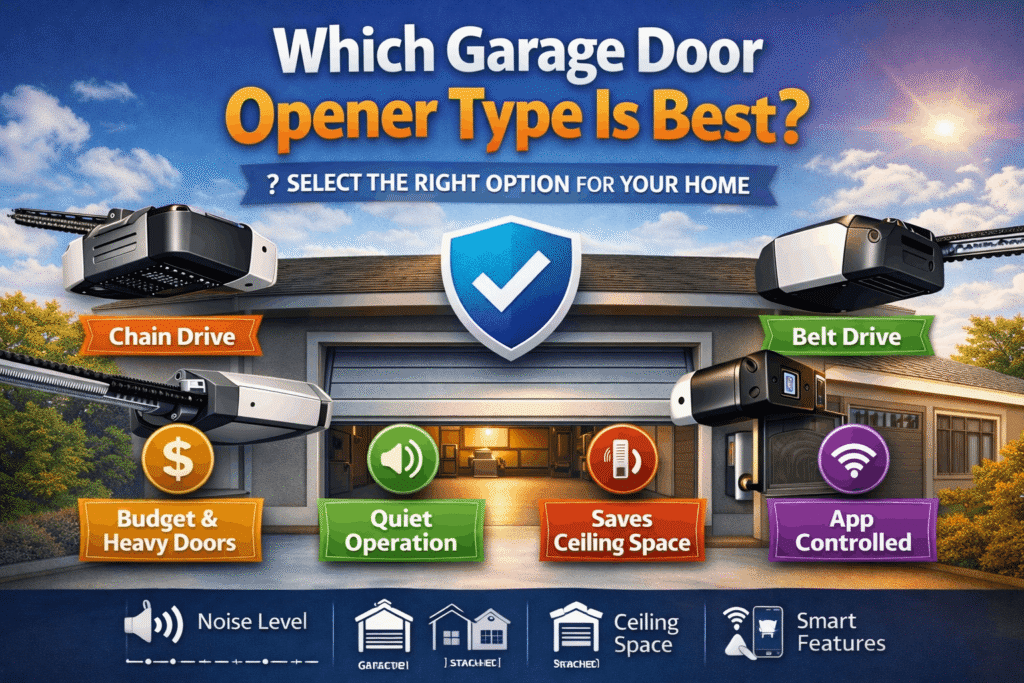
When comparing garage door opener types, there isn’t a single “best” option for everyone. The ideal choice depends on your priorities—such as noise level, garage layout, budget, and desired features.
Best Overall Residential Option: Belt Drive
Belt drive openers are widely regarded as the best all-around choice for most homeowners.
- Why: Very quiet and smooth operation
- Best for: Garages attached to living spaces
- Google update relevance: Quiet systems match searcher intent for “low noise” and “best garage door openers”.
- Summary: Excellent balance of performance, reliability, and comfort
Best for Budget Buyers: Chain Drive
Chain drive openers remain a strong choice for cost-conscious homeowners.
- Why: Most affordable among garage door opener types
- Best for: Detached garages or low-noise concern areas
- Consideration: Noisier than other types
- Update Insight: Google’s quality rankings favour detailed pros/cons for budget options.
Best for Quietest Performance: Direct Drive
If noise reduction is your #1 priority, direct drive openers lead the category.
- Why: The motor moves along the rail — fewer moving parts
- Best for: Attached garages and living areas above the garage
- Google update relevance: Search trends increasingly favour “quietest garage door opener type”.
- Summary: Ultra quiet and low maintenance
Best for Space Saving: Jackshaft (Wall-Mounted)
Jackshaft openers are ideal when ceiling space is limited or you want a modern look.
- Why: Mounted on the wall, not the ceiling
- Best for: High-ceiling garages or custom interiors
- Update Insight: Content that highlights unique benefits (like space saving) ranks better in Google snippets.
Best Smart Technology Option: Smart Wi-Fi Enabled Openers
Smart openers integrate with home systems and offer app control.
Summary: Combines convenience with security features
Why: Remote access, alerts, voice assistant compatibility
Best for: Tech-savvy and connected home users
Update Relevance: Google’s algorithm rewards content that reflects “smart home” trends.
Quick Comparison
| Type | Noise | Best For | Cost |
|---|---|---|---|
| Belt Drive | Very Quiet | Most Homes | Medium |
| Chain Drive | Loud | Budget | Low |
| Direct Drive | Ultra Quiet | Noise-Sensitive | Medium-High |
| Jackshaft | Quiet | Space Saving | High |
| Smart Openers | Varies | Connected Homes | Medium-High |
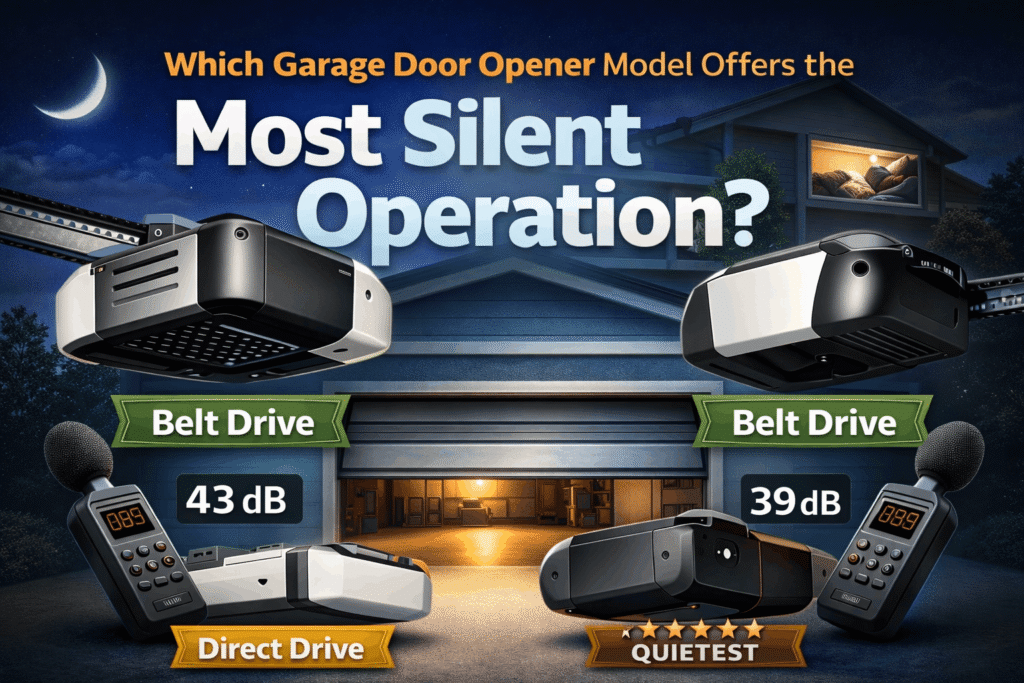
Which garage door opener model offers the most silent operation?
When evaluating garage door opener types, one of the most common questions in 2026 is: Which type operates the quietest? Noise levels are especially important for attached garages or homes with living spaces above or near the garage.
Quietest Garage Door Opener Types
Among all garage door opener types, the following are known for the lowest noise levels:
1. Direct Drive Openers — Quietest Overall
Direct drive openers are widely regarded as the quietest type of garage door opener available today.
- How it works: The motor itself travels along the rail without many moving parts.
- Noise Level: Extremely quiet — minimal vibration and almost no mechanical sound.
- Why It’s Quiet: Fewer moving components reduce friction and noise.
- Best For: Attached garages, homes with bedrooms above the garage, and noise-sensitive areas.
2026 Insight: Direct drive systems are increasingly preferred in modern homes because smart features and silent performance are now standard expectations.
2. Belt Drive Openers — Very Quiet
Belt drive openers are the next quietest among garage door opener types.
- How it works: A reinforced rubber belt moves the trolley along the rail.
- Noise Level: Very quiet — quieter than chain and screw drives.
- Why It’s Quiet: The belt absorbs vibration and noise better than metal chains.
- Best For: Most residential garages, especially attached ones.
2026 Insight: Belt drives remain the most common quiet option on the market due to their balance of performance, cost, and smooth operation.
3. Jackshaft (Wall-Mounted) Openers — Quiet & Space-Saving
Jackshaft openers are also among the quieter garage door opener types, although they work differently.
- How it works: Mounted on the wall beside the door and directly moves the torsion bar.
- Noise Level: Quiet — no overhead rail noise.
- Why It’s Quiet: The mechanism is away from the ceiling and isolated from living space.
- Best For: Garages with limited ceiling space or modern designs.
2026 Insight: Wall-mounted systems are gaining popularity due to both their performance and clean design.
How Much Do Different Garage Door Opener Types Cost?
If you’re comparing garage door opener types, cost is one of the first things to understand. Prices vary based on the mechanism, features (like smart connectivity), horsepower, and brand. Below is a clear, up-to-date breakdown of what you can expect to pay in 2026.
Typical Cost Ranges by Opener Type
| Opener Type | Average Cost (Unit Only) | Smart Features | Notes |
|---|---|---|---|
| Chain Drive | $150 – $300 | Optional | Most affordable, louder operation |
| Belt Drive | $200 – $500 | Optional | Quiet and smooth |
| Screw Drive | $200 – $400 | Optional | Moderate noise |
| Direct Drive | $300 – $600 | Often available | Very quiet, fewer moving parts |
| Jackshaft (Wall‑Mounted) | $400 – $800 | Often integrated | Space‑saving, premium option |
| Smart Garage Openers | $250 – $700 | Standard | Wi‑Fi control and alerts |
1. Chain Drive Openers
Cost: $150 – $300 (unit only)
Chain drive models are the lowest‑priced among garage door opener types. If you choose to add smart features, expect an extra $50–$150.
2. Belt Drive Openers
Cost: $200 – $500 (unit only)
Belt drive openers cost more than chain models because of their quieter, smoother performance.
3. Screw Drive Openers
Cost: $200 – $400 (unit only)
Screw drive systems sit in mid‑range pricing. Smart connectivity is usually optional.
4. Direct Drive Openers
Cost: $300 – $600 (unit only)
Direct drive openers cost more because the motor itself moves along the rail, reducing parts and noise.
5. Jackshaft (Wall‑Mounted) Openers
Cost: $400 – $800 (unit only)
Jackshaft models are typically the most expensive garage door opener types before installation because of their design and space‑saving benefits.
6. Smart Garage Openers
Cost: $250 – $700 (unit only)
Smart garage door openers include Wi‑Fi, app control, and alerts. Pricing overlaps with other types because smart features can be added to chain, belt, screw, and direct drive models.
Installation Costs
In addition to the unit price, professional installation typically costs:
- Basic installation: $150 – $300
- Complex installation: $300 – $500
(Varies by region and garage condition)
Installation pricing is usually separate from the opener cost and depends on labour rates and any required adjustments (springs, tracks, sensors).
Selecting the Ideal Type of Garage Door Opener
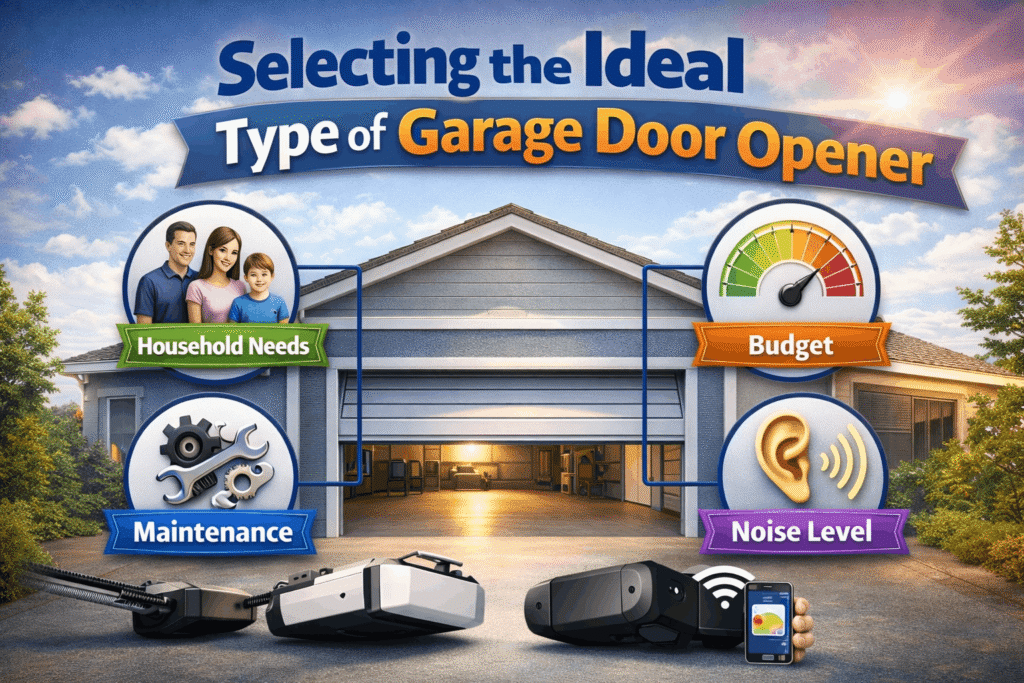
Choosing the right garage door opener type can make a big difference in how your system performs, how quiet it is, and how long it lasts. In 2026, most buyers care about noise level, reliability, smart features, and cost. This guide explains the essential factors you should evaluate to help you choose with confidence.
1. Noise Level
Noise is one of the most important factors when selecting a garage door opener type.
- Belt-drive and direct-drive garage door openers operate with the least noise, making them ideal for quiet performance.
- Chain drive models produce more noise.
- Jackshaft openers are also quiet and smooth.
Best for attached garages: Choose belt drive or direct drive.
Best for detached garages: chain drive is acceptable if noise isn’t a concern.
2. Garage Layout
Your garage’s physical layout affects the type you choose.
- Limited ceiling space: Go with jackshaft (wall-mounted) openers.
- Standard ceiling: Belt drive, chain drive, screw drive, or direct drive all work.
If overhead storage or lighting is installed, wall-mounted options can free up space.
3. Door Weight and Size
The weight of your garage door determines the required strength of the opener.
- Heavy doors need robust systems like chain drive or direct drive with higher horsepower.
- Lighter doors can use belt drive or smart integrated openers.
Always match the opener’s horsepower to your door’s weight specification.
4. Smart Features & Connectivity
smart features are increasingly expected.
- Many modern garage door opener types include Wi‑Fi, app control, and voice assistant support (Amazon Alexa, Google Assistant).
- Smart openers offer remote monitoring, alerts, and secure access.
If convenience and connectivity matter, choose an opener with built‑in smart features or compatibility with smart home systems.
5. Maintenance Requirements
Some openers need more maintenance than others.
- Chain drive and screw drive require periodic lubrication.
- Belt drive, direct drive, and jackshaft systems generally need less upkeep.
If you prefer low maintenance, avoid chain or screw drive systems.
6. Budget Considerations
Budget plays a role in choosing a garage door opener type.
- Budget-friendly: Chain drive openers.
- Mid-range: Belt drive and screw drive options.
- Higher-end: Direct drive and jackshaft openers with advanced features.
Balance cost with features — a quieter and smarter opener may provide better long-term value.
7. Climate and Environment
Environmental conditions can affect some types more than others.
- Screw drive openers can be sensitive to temperature extremes.
- Direct drive and belt drive systems perform consistently in varied climates.
Choose a type that fits your regional weather patterns.
Quick Decision Guide
| Priority | Best Garage Door Opener Type |
|---|---|
| Quiet operation | Belt Drive / Direct Drive |
| Low cost | Chain Drive |
| Low maintenance | Direct Drive / Jackshaft |
| Connected features | Smart Wi‑Fi Openers |
| Limited space | Jackshaft |
Conclusion
Choosing the right garage door opener types is essential for convenience, safety, and long-term reliability. Chain, belt, screw, direct drive, jackshaft, and smart openers each offer unique benefits depending on noise preference, garage layout, and budget.
By understanding these differences, you can select the opener that best fits your home and lifestyle—ensuring smooth, quiet, and efficient operation for years to come.
FAQs
1. What are the main garage door opener types?
The main garage door opener types are:
Chain Drive – strong and affordable but noisy
Belt Drive – smooth and quiet
Screw Drive – simple mechanical design
Direct Drive – ultra-quiet and durable
Jackshaft (Wall-Mounted) – saves ceiling space
Smart Openers – app-controlled with remote monitoring
2. Which garage door opener type is the quietest?
Belt drive and direct drive openers are the quietest options, making them ideal for attached garages or homes with living spaces above.
3. Are chain drive openers still reliable?
Yes, chain drive openers remain reliable and durable, especially for heavy doors or detached garages. The main drawback is noise, which makes them less ideal for modern attached garages.
4. What type of garage door opener is best for smart homes?
Smart garage door openers are best for connected homes. Most belt, direct, and jackshaft openers now come with Wi-Fi integration, app control, and compatibility with voice assistants.
5. Which opener requires the least maintenance?
Direct drive and belt drive openers require the least maintenance.