

Introduction
How does a garage door opener work? If you’ve ever wondered what makes a heavy garage door lift smoothly at the push of a button, you’re in the right place. In this guide, we’ll explain the key parts, how the motor and springs work together, and the safety features that keep your garage door running efficiently and safely.
How does a garage door opener work?
A garage door opener uses an electric motor to move a trolley along a rail, which lifts or lowers the door. The springs handle most of the heavy lifting, while safety sensors and limit switches ensure smooth and secure operation every time.
Main Parts of a Garage Door Opener System
To fully understand how a garage door opener works, you need to know the components that make up the system. Every component serves a distinct function, and together they ensure the door operates smoothly and safely.
1) Motor Unit
The motor unit is the power centre. It contains the electric motor, gears, and control board. When it receives a signal from your remote or wall button, it turns on and drives the mechanism that moves the door.
2) Rail and Trolley
The rail is the long metal track attached to the ceiling. The trolley travels back and forth along this rail. As it moves, it pulls the door open or pushes it closed through an attached arm.
3) Drive Mechanism (Chain, Belt, or Screw)
This is the part connected to the motor that actually moves the trolley.
A chain drive uses a metal chain.
A belt drive uses a reinforced rubber belt.
A screwdriver uses a threaded steel rod.
No matter the type, the goal is the same: convert motor power into motion.
4) Remote Control and Wall Switch
These devices send the command to open or close the door. Newer remotes use secure rolling codes so the signal can’t easily be copied5) Safety Sensors
Positioned close to the ground on each side of the door, these sensors form an invisible safety beam. If anything breaks the beam while the door is closing, the opener stops and reverses direction.
6) Garage Door Springs
The springs do most of the heavy lifting. They counterbalance the door’s weight, allowing the opener to guide it up and down without straining the motor.
When you see these parts working together, it becomes much clearer how a garage door opener works. The motor provides movement, the drive system transfers power, and the springs make lifting the door possible, while safety devices protect people and property.
Step-by-Step – What Happens When You Press the Remote?
If you’re trying to understand how a garage door opener works, the easiest way is to follow what happens right after you hit the button. Here’s the simple sequence most systems use.
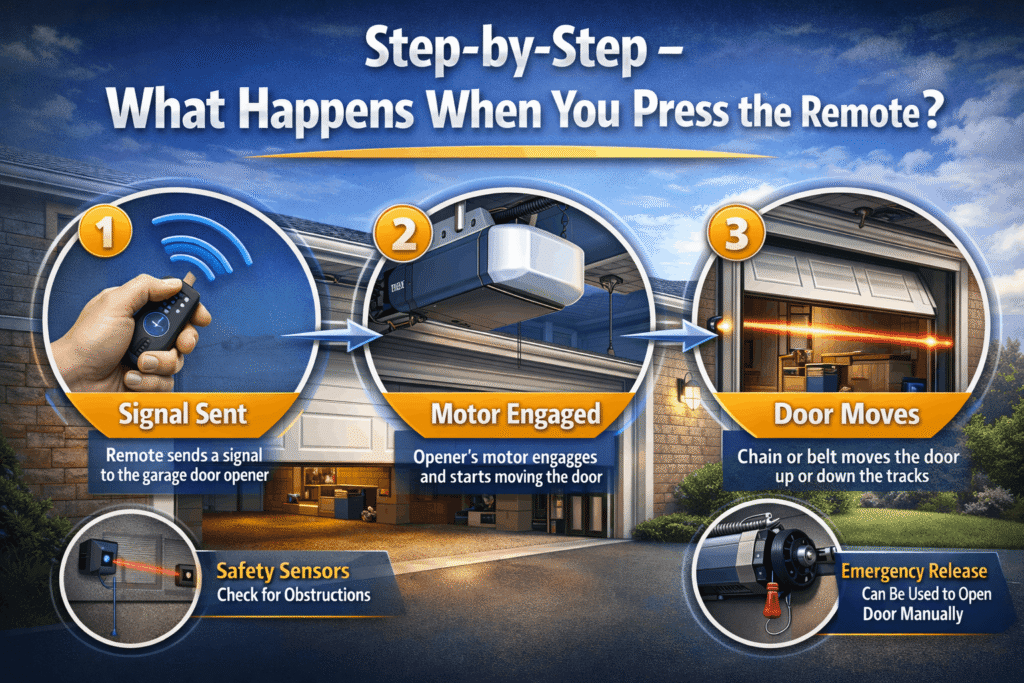
1) The opener receives the signal.
Your remote or wall control sends a coded radio signal. The opener’s receiver recognises it and tells the motor to start.
2) The motor turns on.
Inside the power unit, the electric motor activates and begins rotating in the direction needed to open or close the door.
3) The drive system moves the trolley.
The motor’s rotation moves the chain, belt, or screw. This pushes or pulls the trolley along the rail.
4) The door begins to travel.
The trolley is connected to an arm attached to the door. As the trolley moves, the door rises or lowers along its tracks. The springs handle most of the weight, so the motor guides rather than lifts.
5) Safety sensors stay alert.
If something crosses the sensor beam while the door is closing, the opener immediately stops and reverses.
6) The motor stops at the set limit.
Once the door reaches the fully open or closed position, the limit switch tells the motor to shut off.
How the Motor Lifts a Door That Weighs Hundreds of Pounds.
To understand how a garage door opener works, here’s the key idea: the motor doesn’t lift the full weight.
Garage doors are heavy, but strong torsion or extension springs are designed to counterbalance them. When the door moves, the springs carry most of the load, making the door feel much lighter.
Because of this, the opener’s motor mainly guides and controls the movement through the rail and drive system. If a spring breaks, the motor will struggle or may not move the door at all.
In short: springs do the lifting, and the opener does the moving.
Types of Garage Door Opener Drive Systems
If you want to understand how does a garage door opener work, you need to know the type of drive system it uses. The drive is what transfers power from the motor to the trolley that moves the door.
Here are the main types.
Chain Drive
Uses a metal chain to pull or push the trolley. It’s strong, affordable, and reliable, but usually the noisiest option.
Belt Drive
Uses a reinforced rubber belt instead of a chain. It operates much more quietly and smoothly, making it ideal for garages attached to homes.
Screw Drive
Uses a threaded steel rod that rotates to move the trolley. It has fewer moving parts and requires less maintenance, but noise and performance can vary with temperature.
Wall-Mount (Jackshaft)
Instead of a ceiling rail, this system mounts beside the door and turns the torsion bar directly. It saves overhead space and runs very quietly.
How Safety Features Work
Knowing how a garage door opener works also means understanding its safety systems. Modern openers are designed to prevent accidents and protect your property.
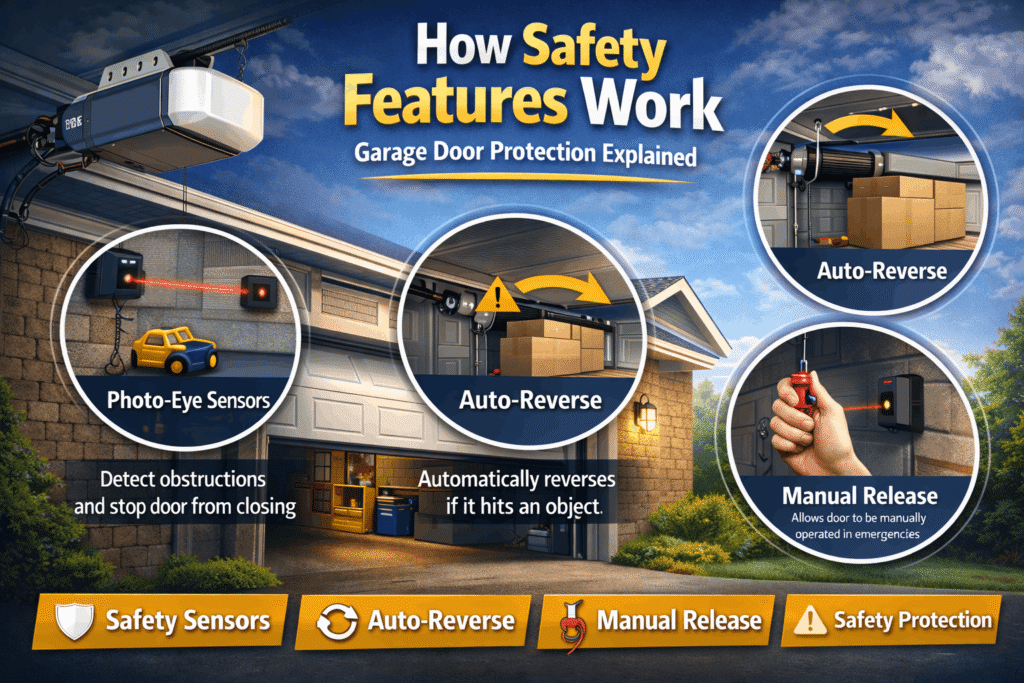
Photo-Eye Sensors
These sensors, mounted near the floor, detect objects in the door’s path.When the safety beam is interrupted, the door immediately halts and moves back up.
Auto-Reverse Mechanism
If the door hits an obstruction or meets resistance, the motor automatically reverses to avoid damage or injury.
Manual Release Cord
This lets you disconnect the opener and operate the door by hand during power outages or emergencies.
These features work together to ensure the door opens and closes safely every time, making your garage secure and reliable.
What Powers the Opener?
When learning how a garage door opener works, it helps to understand where the energy comes from. The opener needs power to run the motor, sensors, and control system.
Electricity
Most openers plug into a standard ceiling outlet. Household power runs the motor that moves the drive system and operates the safety features.
Battery Backup
Many modern units include a built-in battery. If the electricity goes out, the opener can still open and close the door for several cycles.
Smart / Wi-Fi Features
Wi-Fi doesn’t power the motor, but it allows you to control and monitor the opener through a smartphone app while the main electricity supply runs the system.
Common Problems That Stop an Opener from Working
While learning how a garage door opener works, it’s just as important to know why it might stop. Most issues come from a few common trouble spots.
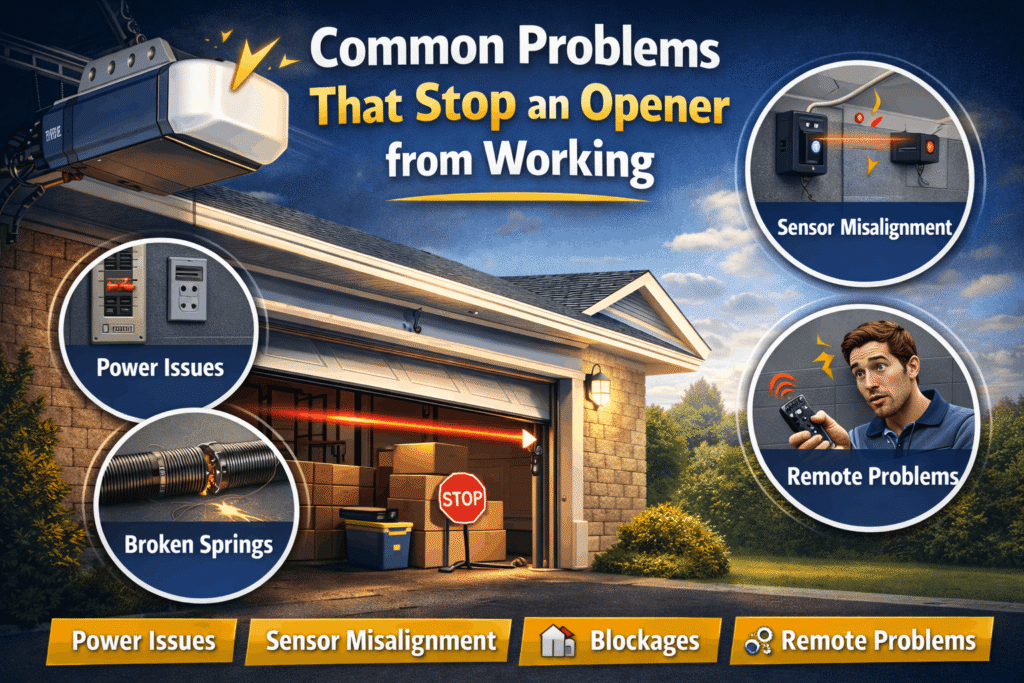
Dead Remote Batteries
If nothing happens when you press the button, weak or dead batteries are often the cause.
Blocked or Misaligned Sensors
If the photo-eye beam is interrupted or out of line, the door may refuse to close.
Broken Springs
Springs carry most of the weight. When one breaks, the opener may strain, move a little, or not lift at all.
Power Supply Issues
An unplugged unit, tripped breaker, or outage will prevent the motor from running.
Worn Gears or Motor Problems
Over time, internal parts can wear out, causing grinding noises or complete failure.
Can You Open a Garage Door Without the Opener?
Many people wonder how a garage door opener works when the power is out or the opener fails. The good news: yes, you can open it manually.
Most garage doors have a manual release cord (usually red) that disconnects the door from the opener. Once pulled, you can lift the door by hand. The springs do most of the heavy lifting, so it won’t feel as heavy as the door’s actual weight.
Always be careful: moving the door manually can be dangerous if the springs are broken or worn. Using the manual release safely ensures you can still access your garage even if the opener isn’t working.
How Long Do Garage Door Openers Last?
If you’re curious about how a garage door opener works, it’s also useful to know its lifespan. Most garage door openers last 10 to 15 years with regular use and proper maintenance.
Factors affecting longevity include:
- Frequency of use (more cycles = faster wear)
- Quality of the motor and drive system
- Maintenance of springs, tracks, and lubrication
Replacing worn parts on time can extend the opener’s life and keep it running smoothly for years.
Signs You May Need a New Opener
Understanding how a garage door opener works also means knowing when it’s time for a replacement. Here are common warning signs:
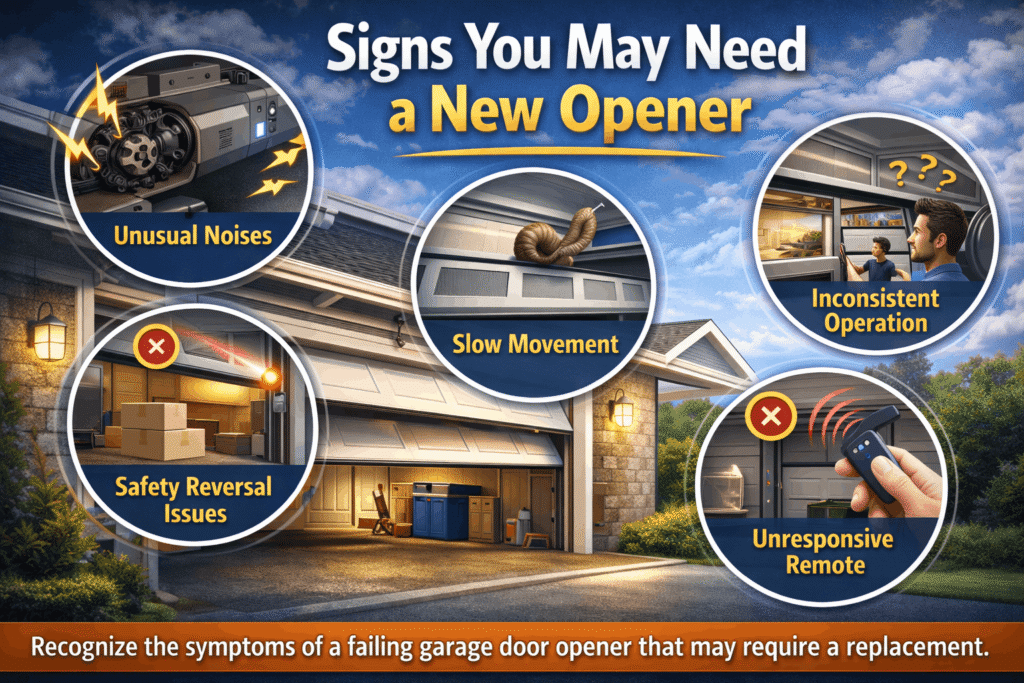
- Slow or inconsistent movement – the door hesitates or struggles to open/close.
- Loud or unusual noises – grinding, rattling, or squealing sounds from the motor or drive.
- Frequent breakdowns – repeated issues with the motor, sensors, or remote.
- Door doesn’t stay in position – the opener can’t fully open or close the door.
- Old age – over 15 years old, parts may be worn and unreliable.
Conclusion
Understanding how does a garage door opener works makes it easier to use, maintain, and troubleshoot your system. The opener’s motor, springs, drive system, and safety features all work together to move a heavy door smoothly and safely.
Regular maintenance, timely repairs, and knowing the warning signs can extend its lifespan and prevent problems. Whether you’re upgrading to a quieter drive, adding smart features, or just curious about the mechanics, knowing how your opener works helps you keep your garage secure and functional.
FAQs
Do garage door openers use a lot of electricity?
No. They consume very little power, similar to a small appliance, and only run while the door is moving.
Can I replace just the motor?
In most cases, yes. But sometimes it’s more cost-effective to replace the entire opener, especially if it’s old.
Why is my opener loud?
Loud noise usually comes from a chain drive, worn gears, or lack of lubrication. Belt drives are quieter.
Are smart openers worth it?
Yes, they allow remote control, monitoring, and notifications, adding convenience and security.
Can I operate the door manually?
Yes. Using the manual release cord disconnects the opener, letting you lift the door by hand