
You just closed the garage door and caught a sharp, hot smell drifting from the opener unit — and now you’re standing there wondering if you should unplug it or call someone. In most cases the cause is mechanical, not an emergency, but a few warning signs mean you should stop and act now. Here’s how to tell which one you’re dealing with.
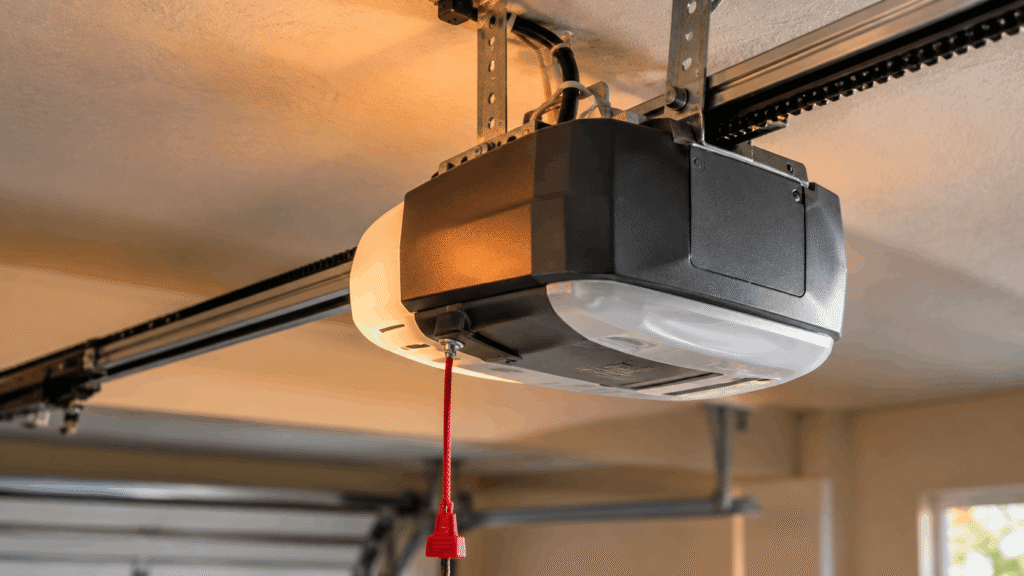
Quick Answer: A garage door opener smells like burning most often because the motor is overheating, the gears are worn, or the door is out of balance and forcing the motor to work harder than it should. Stop using the opener immediately if you see smoke, sparks, or the smell doesn’t fade within a few minutes — that signals an electrical fault.
Table of Contents
What You Need to Know
- A burning smell usually points to one of five causes: an overheating motor, worn gears, drive belt friction, an out-of-balance door, or a failing electrical component.
- Stop using the opener right away if you see smoke, hear popping or sparking, or a breaker trips.
- A smell that only shows up during long or repeated use usually means the motor is overworking — often because the door itself is out of balance.
- Most opener motors aren’t built for continuous duty; running one back-to-back multiple times can heat it past a safe threshold.
- If the smell lingers after the opener cools down, or you can’t identify the source, call a licensed technician instead of opening up the electrical components yourself.
What Does It Mean When Your Garage Door Opener Smells Like Burning?
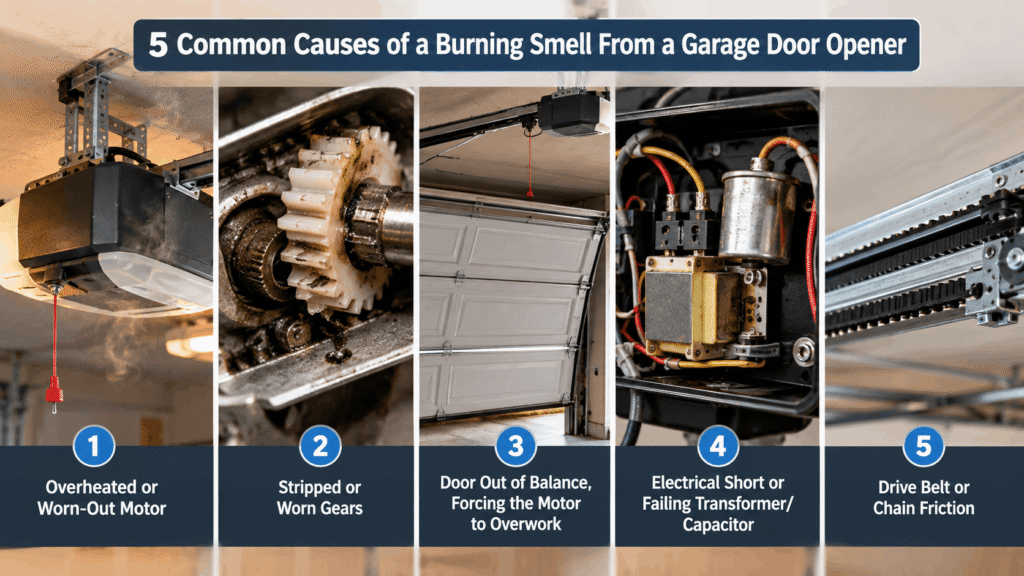
A burning smell from a garage door opener is the unit telling you something is working harder than it’s built for. The smell is a symptom, not a diagnosis — the source is almost always one of five things: an overheating motor, worn-down gears, drive belt friction, a door that’s out of balance, or a failing electrical component like a transformer or capacitor.
Openers are built for a duty cycle — short bursts of use, not constant operation. A smell that shows up after several open-and-close cycles in a row is often just the motor running hotter than usual, not something broken outright.
Is It Safe to Keep Using the Opener Right Now?
Stop using the opener immediately if you smell burning and also see smoke, hear sparking, or notice a tripped breaker. Otherwise, it’s usually safe to pause and diagnose before you decide what’s next.
- Unplug the opener from the wall outlet — not just stop pressing the remote.
- Open and close the door manually to confirm the track and rollers aren’t the actual source.
- Check the breaker panel. If it’s tripped, don’t reset it more than once before calling someone.
- Pay attention to the type of smell: a sharp, plasticky odor usually means burning insulation (electrical), while a warm, metallic smell usually means mechanical friction or heat.
5 Common Causes of a Burning Smell From a Garage Door Opener
Overheated or Worn-Out Motor
Most residential opener motors are rated for intermittent use — a handful of cycles per hour, not continuous operation. Running the door repeatedly in a short window can push the motor past that threshold, producing a warm, slightly burnt smell. A motor nearing the end of its typical 10–15 year lifespan can also run hotter than it used to, even under normal use.
Stripped or Worn Gears
The nylon or plastic gear inside the opener’s gearbox is designed as a sacrificial part — it’s meant to wear out before the motor does. When it strips, friction and heat build up fast, often producing a burning-plastic smell along with grinding or slipping sounds during operation.
Door Out of Balance, Forcing the Motor to Overwork
If the door is heavier on one side, or the springs have worn down, the opener has to compensate every time it lifts the door. Test it yourself: disconnect the opener and lift the door by hand. If it doesn’t stay put on its own around waist height, the door is out of balance, and the motor has been working overtime because of it.
Electrical Short or Failing Transformer/Capacitor
A sharper, more chemical smell — closer to burning plastic or ozone than “hot metal” — usually points to an electrical component rather than the motor. A failing transformer, capacitor, or damaged wiring can overheat even when the door isn’t moving, which is why some people notice the smell with the opener sitting completely idle.
Drive Belt or Chain Friction
On a belt-drive opener, a belt that’s lost tension can slip against the drive gear, generating friction heat and a rubbery burning smell. On chain-drive units, a dry or poorly tensioned chain creates similar friction against the rail.
Burning Smell Diagnostic Decision Tree
| What You’re Noticing | Likely Cause | What to Do Next |
|---|---|---|
| Smell after several open/close cycles in a row | Motor overheating from overuse | Let it rest 15–20 minutes; avoid back-to-back cycles |
| Smell, plus the door feels heavy or won’t stay open manually | Door out of balance | Have the springs and balance checked — don’t keep using it |
| Smell, plus grinding or slipping sounds | Worn or stripped gear | Gearbox likely needs replacement |
| Smell with no door movement at all | Electrical short or failing transformer | Unplug the unit and call a technician |
| Rubbery smell, belt or chain looks loose | Belt or chain friction | Check tension; may just need adjustment |
Save or screenshot this diagnostic table — it covers the five most common causes and tells you exactly what to check first.
If you’d rather have a printable version of this checklist to keep taped up in the garage, it’s one of the things we send out to our email list.
How Do I Know If My Garage Door Opener Is Dying?
A burning smell is one signal, but it’s rarely the only one. Openers nearing the end of their life tend to show several signs together, not just one.
- It’s 10 years or older and getting noisier than it used to be.
- The door responds slower to the remote or wall button than it used to.
- It reverses partway through closing more often, without an obvious obstruction.
- The burning smell returns even after you’ve let the unit rest and cool down.
Garage Smells Like Burning But the Opener Seems Fine — What Else Could It Be?
If the opener is cool, hasn’t run recently, and shows none of the signs above, the smell may not be coming from the opener at all. A garage collects several other potential sources: residual exhaust or engine smell from a car, an overloaded outlet or extension cord, a struggling freezer or appliance motor, or — less commonly — rodents chewing on wiring insulation. Worth ruling these out before assuming the opener itself is the problem.
When to Call a Professional vs. DIY Fix
Some causes are safe to address yourself; others aren’t worth the risk. Springs, in particular, are under enough tension to cause serious injury if handled incorrectly.
Safe to try yourself:
- Letting an overheated motor cool down before running it again
- Lubricating a dry chain or checking belt tension
- Tightening obviously loose mounting hardware
Call a professional for:
- Anything involving the torsion or extension springs
- Gear replacement inside the opener housing
- Any electrical component — transformer, capacitor, or wiring
None of this is a substitute for a licensed technician if you smell burning insulation, see visible scorch marks, or the smell keeps returning. According to the U.S. Consumer Product Safety Commission, overheating electrical components are a recognized home fire risk, and repeated burning smells from an electrical device shouldn’t be treated as routine wear.
Related Garage Door Opener Problems
A burning smell often shows up alongside other symptoms worth checking. If your opener is also making unusual noise, the garage door opener troubleshooting guide and 9 common garage door opener problems and how to fix them cover that in more depth. If the door is struggling to open or close all the way, see the garage door opener problems opening and closing guide. And if the smell started right after a power interruption, check garage door opener not working after a power outage.
[CONTENT GAP: no commercial repair-cost or find-a-pro page exists yet — once one is published, it belongs in the “When to Call a Professional” section above as the natural next step for readers who’ve decided they need a technician.]
FAQs
Why does my garage smell like something is burning?
Not every burning smell in a garage comes from the door opener. Cars, overloaded outlets, appliance motors like a garage freezer, and even chewed wiring can all produce a similar smell. Check whether the opener itself is warm or was recently in use — if it’s cold and idle, look elsewhere in the garage first.
Why do I smell electrical burning but nothing is burning?
A sharp, plasticky or ozone-like smell with no visible fire usually means a component is overheating internally — commonly a transformer, capacitor, or a section of damaged wiring. This can happen even while the opener sits idle, since the fault is in the electrical component itself, not the motor’s mechanical operation.
How do I know if my garage door opener is dying?
Look for a combination of signs rather than just one: the unit is 10+ years old, it’s noisier than it used to be, it responds more slowly, it reverses mid-close without an obstruction, or the burning smell keeps returning after the motor has cooled. Any one of these alone isn’t conclusive — several together usually is.
Why would a garage door opener smoke?
Visible smoke typically means a motor has been pushed well past its overheating point, a gear has stripped and is generating significant friction, or an electrical component has failed outright. Smoke is a step beyond a burning smell — unplug the unit immediately and don’t run it again until it’s been inspected.
How much does it cost to replace a garage door opener motor?
Cost depends on the opener’s drive type, horsepower, and whether it’s a standalone motor swap or a full unit replacement, along with local labor rates. Rather than estimate a number here, it’s worth getting a quote from a local technician once you’ve confirmed the motor — not the gears or balance — is actually the problem.
What to Do Next
Start by narrowing down the cause with the diagnostic table above — that determines whether you’re looking at a quick fix or a call to a professional. If the noise or performance issues go beyond just the smell, the garage door opener troubleshooting guide is the next logical stop, and the 9 common garage door opener problems article covers related symptoms you may be seeing alongside it.
Pingback: Garage Door Opener Smoking? Causes & What to Do Now