
Introduction
Choosing the right garage door opener starts with understanding the different garage door opener motor types available. The motor is the core part of the system—it provides the power that lifts and lowers your garage door safely and smoothly.
Different garage door opener motor types affect noise level, lifting strength, energy efficiency, and overall durability. Some motors are designed for heavy doors, while others focus on quiet and efficient operation for homes with attached garages.
What Is a Garage Door Opener Motor?
A garage door opener motor is the part of the opener that generates the power needed to lift and lower your garage door. It converts electrical energy into mechanical movement, allowing the door to open and close smoothly.
When comparing garage door opener motor types, the motor determines how strong, quiet, and efficient the system will be. It works together with the drive system (chain, belt, or screw) to move the door along its track.
Main Garage Door Opener Motor Types
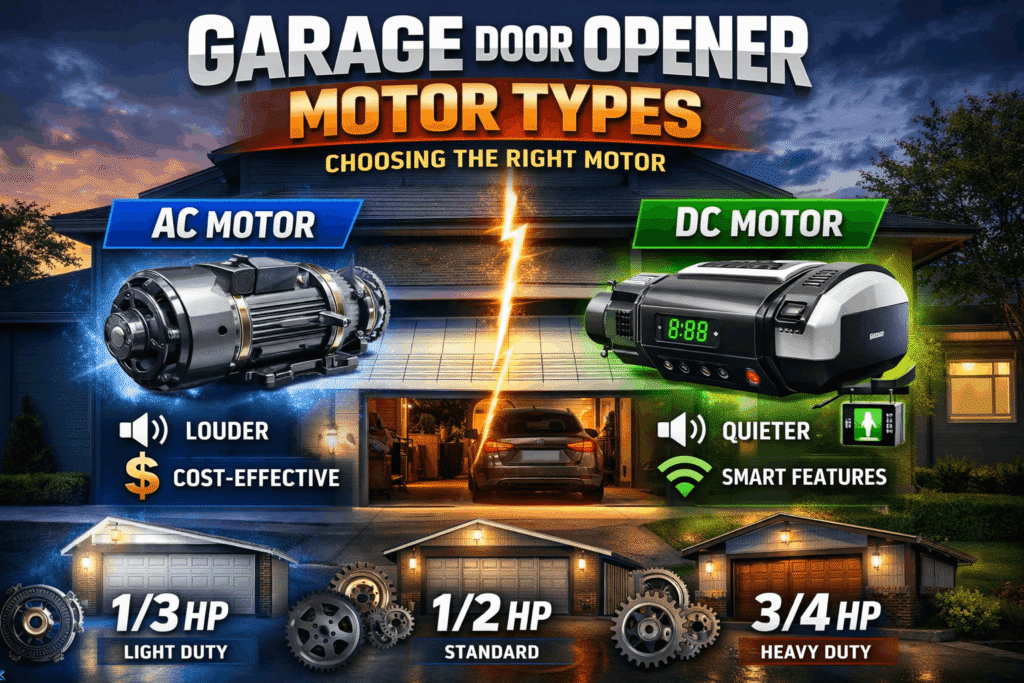
When comparing garage door opener motor types, most residential systems use one of two main motor technologies: AC motors or DC motors. Each type has different advantages depending on your needs.
1. AC Motors
AC (alternating current) motors are the traditional option found in many older and budget-friendly openers. They are strong, durable, and generally more affordable.
Pros:
- Reliable and long-lasting
- Lower upfront cost
- Good for heavy doors
Cons:
- Louder operation
- Fewer advanced features
AC motors are a solid choice if durability and cost are your main priorities.
2. DC Motors
DC (Direct Current) motors are more modern and energy-efficient. They operate more smoothly and quietly compared to AC motors.
Pros:
- Quieter performance
- Soft start and stop (less wear and tear)
- Better energy efficiency
- Often compatible with smart features and battery backup
Cons:
- Slightly higher cost
DC motors are ideal for attached garages where noise reduction and smooth operation are important.
Garage Door Opener Motor Types by Horsepower
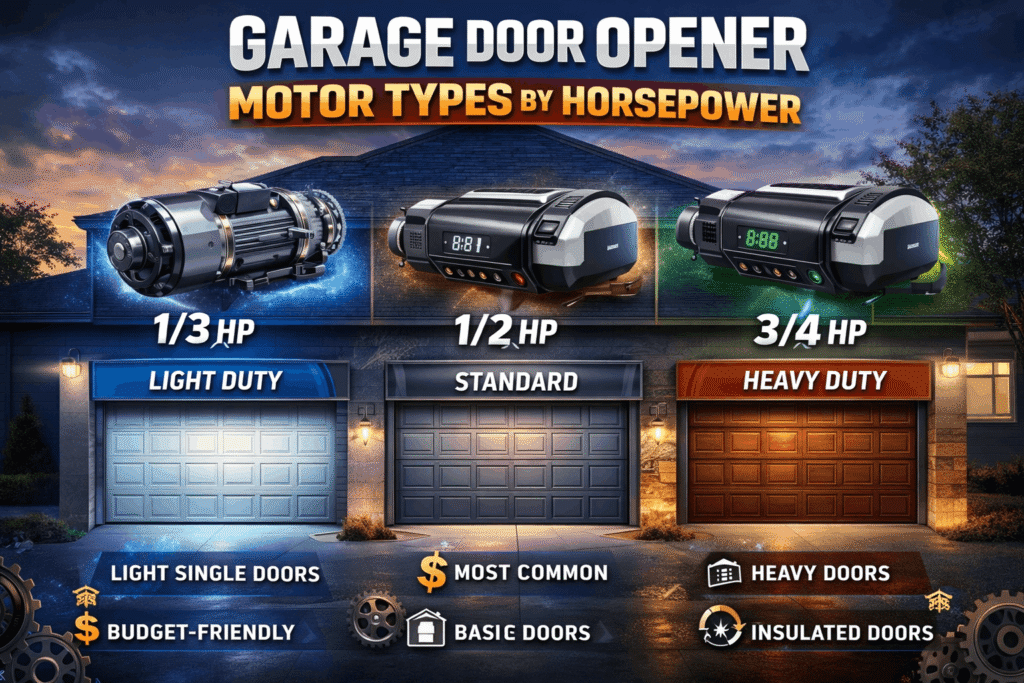
When comparing garage door opener motor types, horsepower (HP) is a key factor. Horsepower determines how much lifting power the motor provides. Choosing the right HP ensures smooth performance and longer motor life.
1/3 HP
Best for lightweight single garage doors made of aluminium or thin steel.
- Budget-friendly
- Suitable for low-usage garages
- Not ideal for heavy or insulated doors
1/2 HP
The most common residential option.
- Works well for standard single or double doors
- Good balance of power and price
- Reliable for everyday use
3/4 HP
Ideal for heavier or insulated garage doors.
- Stronger lifting capacity
- Better for solid wood or double-wide doors
- Handles frequent use more easily
1 HP and Above
Designed for oversized, heavy, or commercial doors.
- Maximum power and durability
- Best for large custom or carriage-style doors
- Suitable for high-cycle usage
AC vs DC Garage Door Opener Motors.
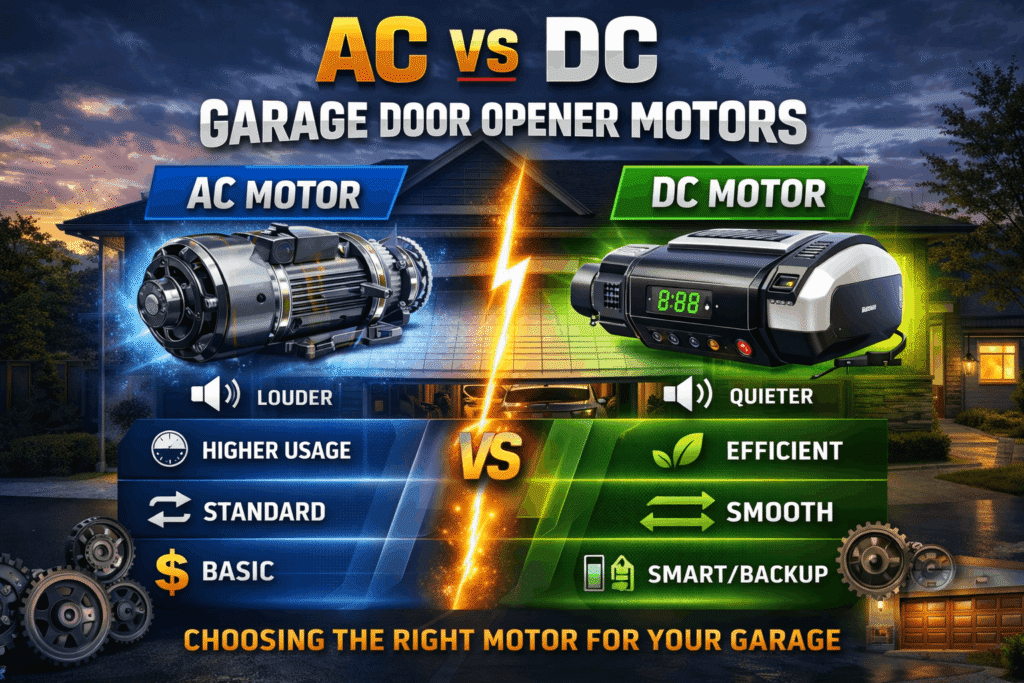
When comparing garage door opener motor types, the two main motor technologies are AC and DC. Knowing the differences helps you choose the best fit for your garage.
Noise Level
AC Motors: Tend to be louder during operation.
DC Motors: Much quieter, ideal for attached garages.
Energy Efficiency
AC Motors: Use more power and are less efficient.
DC Motors: More energy-efficient and consume less electricity.
Smoothness of Operation
AC Motors: Standard start/stop motion.
DC Motors: Soft start and stop for smoother performance.
Features & Technology
AC Motors: Basic functionality.
DC Motors: Often compatible with smart features and battery backups.
Cost
AC Motors: Generally more affordable upfront.
DC Motors: Slightly higher cost but better long-term efficiency.
Maintenance & Lifespan
AC Motors: Simple design, durable but louder.
DC Motors: Advanced design, quieter, and often longer lasting.
Signs You Need to Replace Your Garage Door Opener Motor
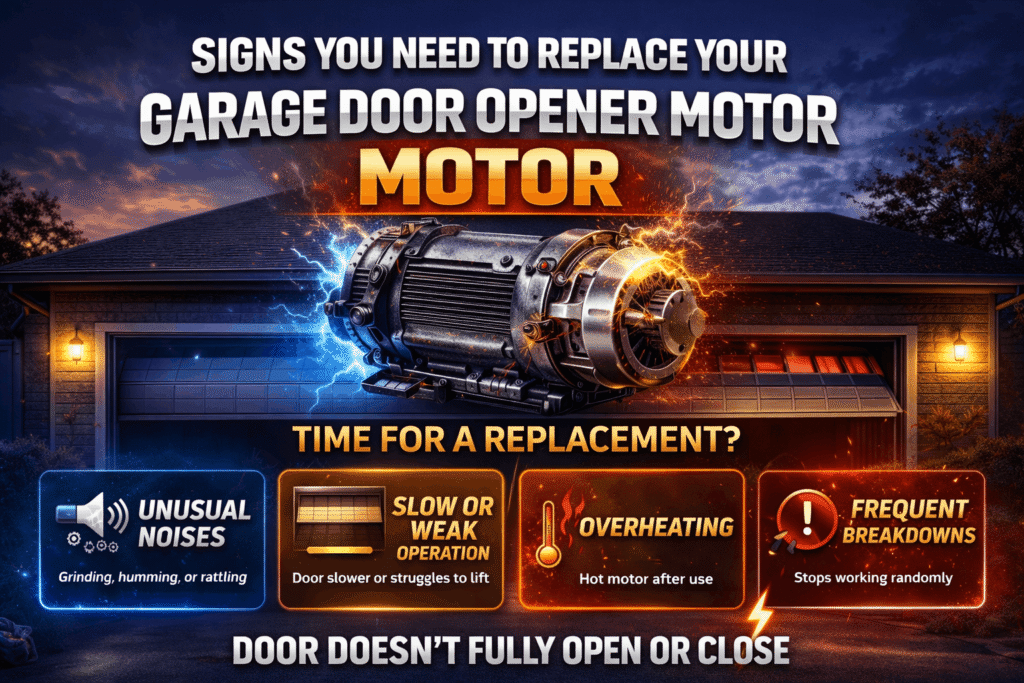
Even the best garage door opener motor types wear out over time. Recognising early warning signs can prevent sudden failure and costly repairs.
Unusual Noises
Grinding, humming, or rattling sounds may indicate internal motor wear or failure.
Slow or Weak Operation
If the door opens slower than usual or struggles to lift, the motor may be losing power.
Overheating
A motor that feels excessively hot after use could be failing or overloaded.
Frequent Breakdowns
If your opener stops working randomly or needs constant repairs, the motor may be near the end of its lifespan.
Door Doesn’t Fully Open or Close
Inconsistent movement can signal motor or internal component issues.
If you notice these problems, it may be time to upgrade to one of the newer garage door opener motor types for better performance, efficiency, and reliability.
Conclusion
Choosing the right garage door opener motor types is essential for smooth, quiet, and reliable operation. AC motors offer durability and affordability, while DC motors provide quiet, energy-efficient, and advanced performance.
Consider your garage door weight, usage frequency, and noise preferences when selecting a motor. Picking the right motor type ensures long-lasting performance, reduces maintenance, and improves your overall garage experience.
FAQs
What are the main garage door opener motor types?
The two primary garage door opener motor types are AC motors and DC motors. AC motors are durable and budget-friendly, while DC motors are quieter, smoother, and more energy-efficient.
Which motor type is better: AC or DC?
It depends on your needs. AC motors are reliable and affordable. DC motors are better for quiet operation, smart features, and energy efficiency—especially in attached garages.
What horsepower do I need for my garage door?
For most homes, a 1/2 HP motor is sufficient. Lightweight single doors may use 1/3 HP, while heavy or insulated double doors may require 3/4 HP or higher.
How long do garage door opener motors last?
Most garage door opener motor types last 10–15 years with proper maintenance. Usage frequency and door weight can affect lifespan.
Are DC motors more expensive?
Yes, DC motors usually cost more upfront. However, they often provide better efficiency, smoother performance, and additional features.