
Your opener just started grinding on the way up, or maybe it’s run fine for a decade and you’re wondering if you’re on borrowed time. Either way, you want a real number, not a sales pitch. Here’s what actually determines how long these units last, and how to tell where yours stands.
Quick Answer: Most garage door openers last 10 to 15 years, or roughly 10,000 to 15,000 open-close cycles, whichever comes first. Belt-drive and DC-motor models tend to run quieter and last slightly longer than older chain-drive, AC-motor units. Climate, usage frequency, and maintenance history all shift that range in either direction.
Table of Contents
What You Need to Know
- Most openers last 10–15 years, or 10,000–15,000 open-close cycles.
- Belt-drive and DC-motor units generally outlast older chain-drive, AC-motor models.
- Grinding noise, slow response, and inconsistent remotes are the clearest signs of a failing opener.
- Regular lubrication and balance checks can add real years to the unit’s working life.
- An opener under 5 years old with problems is usually a fixable part, not a replacement.
How Long Do Garage Door Openers Last, On Average?
A residential garage door opener typically lasts 10 to 15 years under normal household use. That range comes from two things working together: calendar age and cycle count.
According to DASMA (Door and Access Systems Manufacturers Association) cycle standards, most residential operators are rated for around 10,000 to 15,000 open-close cycles over their lifetime. A household that opens the garage 4 times a day burns through roughly 1,460 cycles a year, which lines up with that 10-to-15-year window. A household with teenagers, a home business, or a detached garage used constantly can burn through that cycle rating in under 8 years.
Age alone doesn’t tell the full story. A 12-year-old opener used twice a day can easily outlast a 6-year-old unit that’s cycled 10 times a day.
Garage Door Opener Lifespan by Drive Type
Drive type changes both the wear pattern and the realistic lifespan. Save or screenshot this table, it’s the fastest way to sanity-check your own opener against the norm for its type.
| Drive Type | Typical Lifespan | Typical Cycle Rating | Notes |
|---|---|---|---|
| Chain drive | 10–15 years | ~10,000–15,000 | Most durable moving parts, loudest, minimal drive-component replacement needed |
| Belt drive | 10–15 years | ~10,000–15,000 | Motor life matches chain drive; the rubber belt itself may need replacing around year 8–10 even if the motor is fine |
| Screw drive | 10–15 years | ~10,000–15,000 | Fewer moving parts, but temperature swings can thicken the lubricant and speed up wear |
| Direct drive / jackshaft | 15+ years (newer designs) | Manufacturer-specific | Fewer moving parts and typically a DC motor with soft start/stop, which reduces mechanical stress over time |
Treat the cycle figures above as general industry ranges, not a guarantee for any specific model. Check your unit’s manual or the manufacturer’s spec sheet for its exact rating before making a replacement decision.
Chain Drive
Chain drives are the workhorses of the category. The metal chain rarely fails outright; it’s usually the motor or the logic board that goes first, not the chain itself.
Belt Drive
Belt drives wear differently. The rubber belt is the component most likely to need attention before the motor does, even on an otherwise healthy unit.
Screw Drive
Screw drives have the fewest moving parts, which helps longevity, but they’re more sensitive to cold-weather lubricant thickening than chain or belt systems.
Direct Drive / Jackshaft
These are the newest mainstream design. Housing the motor in the trolley or on the wall (jackshaft) instead of a long rail reduces vibration and mechanical stress, which is part of why manufacturers often quote longer service life for these models.
Does Motor Type (AC vs. DC) Affect Lifespan?
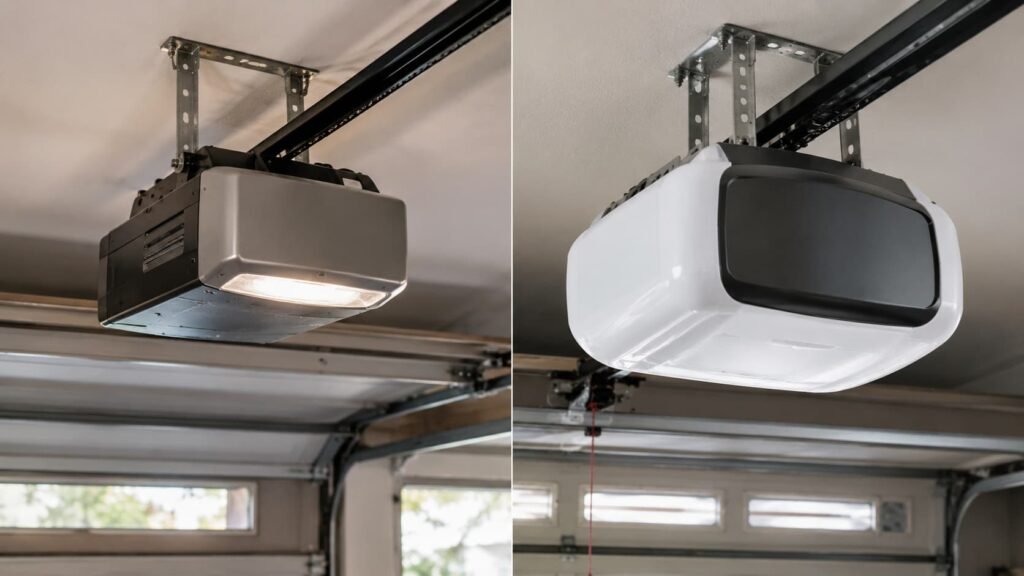
Yes, and this matters more than most people expect. Older AC motors run at full power every time they start and stop, which creates more mechanical shock on the motor and drive components over years of use.
Newer DC motors ramp up and slow down gradually (soft start/stop), which reduces that repeated stress. DC motors generally hold up better over a long service life, which is part of why most newer openers, including direct-drive and jackshaft models, use them. For a full breakdown of how these motors work and which one fits your setup, see our garage door opener motor types guide.
What Shortens or Extends a Garage Door Opener’s Lifespan
Five factors do most of the work here:
- Usage frequency — more daily cycles means the cycle-rating ceiling arrives sooner.
- Climate and humidity — extreme heat, cold, or coastal humidity accelerates wear on seals, lubricant, and electronics.
- Door balance and weight — an unbalanced or overweight door forces the motor to work harder on every cycle, cutting years off its life.
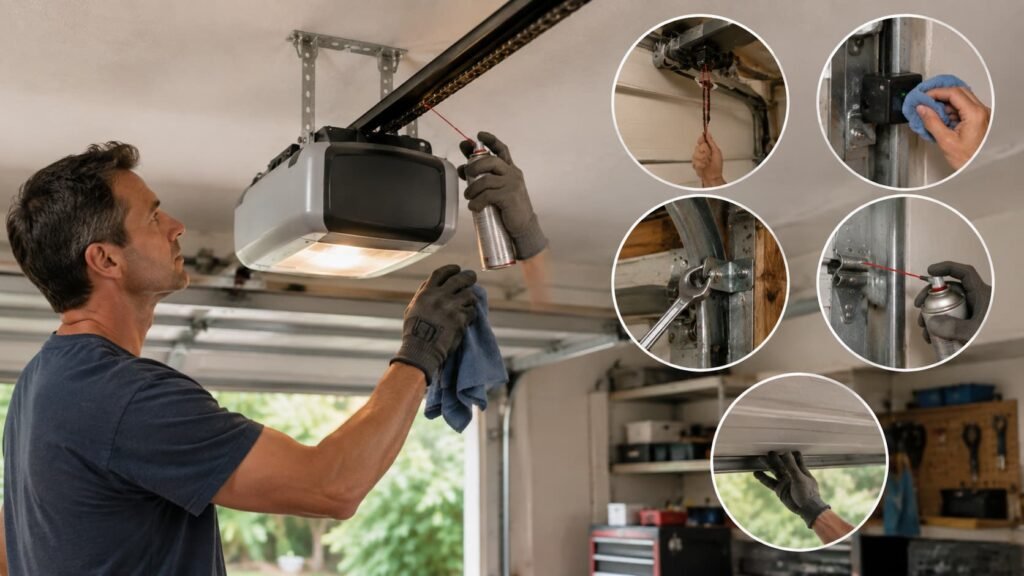
- Maintenance history — lubrication, tightening, and sensor cleaning matter more than brand.
- Power quality — surges and outages during operation stress the logic board more than the motor itself.
An opener carrying an unbalanced door is doing the mechanical equivalent of running uphill on every single cycle. That’s often the real reason a “premium” opener dies early while a budget one outlasts it next door.
7 Signs Your Garage Door Opener Is Near the End of Its Life
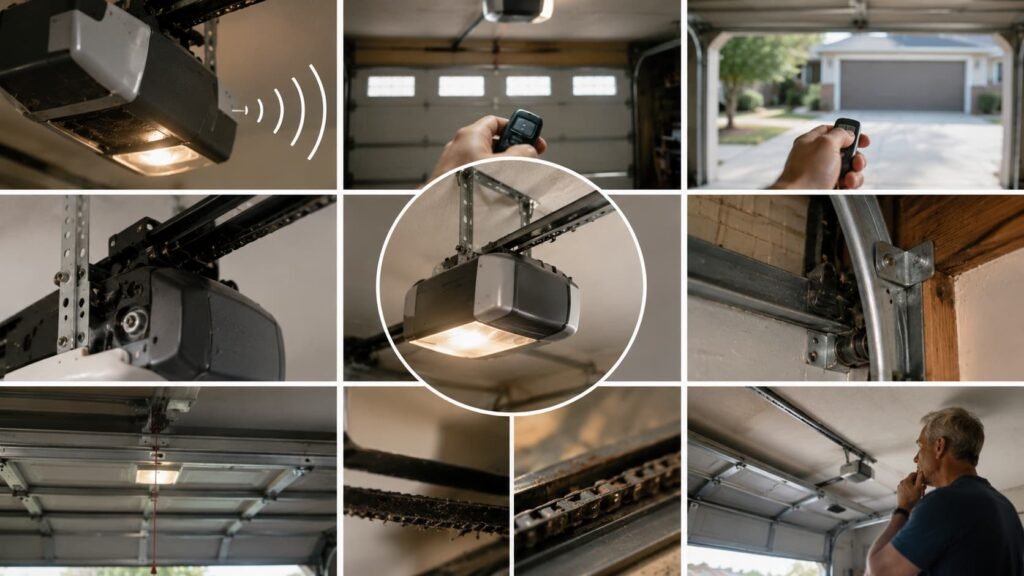
- Grinding or scraping noise during operation that wasn’t there before.
- Slow response between pressing the remote and the door moving.
- Inconsistent remote range, where it works up close but not from the driveway.
- The motor runs but the door barely moves, a sign the motor is losing power.
- Frequent auto-reversals with no visible obstruction.
- Visible wear on the belt, chain, or drive rail.
- The unit is past 10–12 years old and showing any of the above, even mildly.
One or two of these on their own usually mean a repair. Three or more together, especially on a unit past the 10-year mark, is a strong signal you’re closer to replacement than repair.
How Often Should You Replace a Garage Door Opener?
Most homeowners replace their opener every 10 to 15 years, driven by cycle count rather than a fixed calendar date. There’s no scheduled “replace by” date the way there is with a smoke detector.
The better trigger is symptoms plus age: if your opener is past 10 years old and showing two or more of the warning signs above, plan the replacement now rather than waiting for a full failure that leaves your garage door stuck.
Repair or Replace?
This is where age, symptoms, and cost intersect. A single failed component, like a logic board, sensor, or remote, is almost always worth repairing on a unit under 8 years old.
Once you’re past the 10–12 year mark and looking at multiple issues at once, the math usually favors replacement, since a new unit resets your cycle count and often adds features like battery backup and smartphone control. For actual dollar figures on both paths, see our garage door opener cost breakdown.
How to Extend Your Garage Door Opener’s Lifespan
A few consistent habits genuinely add years to the unit you already own:
- Lubricate the chain, belt, or screw every 6 months with a garage-door-specific lubricant, not household oil.
- Check door balance twice a year by disconnecting the opener and lifting the door by hand; it should stay put at waist height.
- Clean and test the safety sensors monthly, since dirty sensors cause the motor to work through extra reversal cycles.
- Tighten hardware annually, since vibration loosens bolts on the rail and mounting brackets over time.
- Avoid manual force on a door that’s opening slowly; that’s the motor telling you something’s wrong, not a cue to push harder.
If you want a printable version of this maintenance routine along with seasonal reminders, our newsletter sends a full garage door maintenance checklist you can keep in the garage.
Common Mistakes That Shorten Opener Lifespan
Ignoring an unbalanced door. Homeowners fix the opener repeatedly without ever testing door balance, which means the new motor wears out on the same schedule as the old one.
Skipping lubrication entirely. A completely dry chain or screw drive can cut years off the expected lifespan, and it’s a five-minute fix.
Waiting for total failure. Replacing an opener reactively, after it’s fully stuck, means an emergency call instead of a planned purchase, which usually costs more.
FAQs
How often should garage door openers be replaced?
Most openers are replaced every 10 to 15 years, based on cycle count rather than a fixed schedule. If your unit is past 10 years old and showing multiple warning signs like grinding noise or slow response, plan a replacement rather than waiting for full failure.
What is the average cost to replace a garage door opener?
Replacement cost depends heavily on drive type, motor type, and smart features. See our full garage door opener cost guide for current pricing by category.
How do I know if my garage door opener needs to be replaced?
Look for grinding noise, slow response time, inconsistent remote range, frequent unexplained reversals, and visible wear on the belt or chain. Two or more of these on a unit past 10 years old points toward replacement rather than repair.
How long do garage door opener motors usually last?
The motor itself often outlasts other components, especially in DC-motor units with soft start/stop technology. In AC-motor units, the motor and drive system tend to wear out around the same time, roughly 10 to 15 years under normal use.
Can a garage door opener last 20 years?
It’s possible with light use, good door balance, and consistent maintenance, but it’s the exception, not the norm. Most units approach or exceed their rated cycle count well before the 20-year mark.
What to Do Next
If your opener is showing early warning signs, start by checking whether it’s a belt-drive or chain-drive system, since that affects what’s likely failing. If you’ve decided it’s time to replace it, confirm what size opener you actually need before you buy, and check current replacement costs so you’re budgeting accurately.