

Introduction
Belt drive vs chain drive garage door opener—choosing the right system can make a big difference in noise, durability, and performance. With numerous choices on the market, it’s essential to learn how each option functions, weigh their advantages and drawbacks, and decide which suits your home best. This guide explains all the key details to help you choose with confidence.
Belt Drive vs Chain Drive Garage Door Opener
If you’re trying to quickly decide between a belt-drive vs. chain-drive garage door opener, this side-by-side comparison will help you see the real differences at a glance.
Both types are reliable and widely used, but they differ in noise level, cost, maintenance, and long-term performance. Here’s a clear breakdown:
Belt Drive vs Chain Drive Garage Door Opener Comparison Table
| Feature | Belt Drive Garage Door Opener | Chain Drive Garage Door Opener |
|---|---|---|
| Noise Level | Very quiet – smooth rubber belt operation | Noisy – metal chain creates vibration |
| Best For | Attached garages, homes with living space above | Detached garages, budget setups |
| Price Range | Higher upfront cost | More affordable |
| Durability | Highly durable with less vibration wear | Extremely strong and rugged |
| Maintenance | Low maintenance | Requires periodic lubrication |
| Strength | Strong, but slightly less rugged than chain | Very strong – ideal for heavy doors |
| Lifespan | 15–20 years (with proper maintenance) | 10–15 years on average |
| Vibration Level | Minimal vibration | Higher vibration |
| Installation Cost | Slightly higher | Usually lower |
| Overall Comfort | Smooth and quiet operation | Reliable but louder |
What Is a Belt Drive Garage Door Opener?
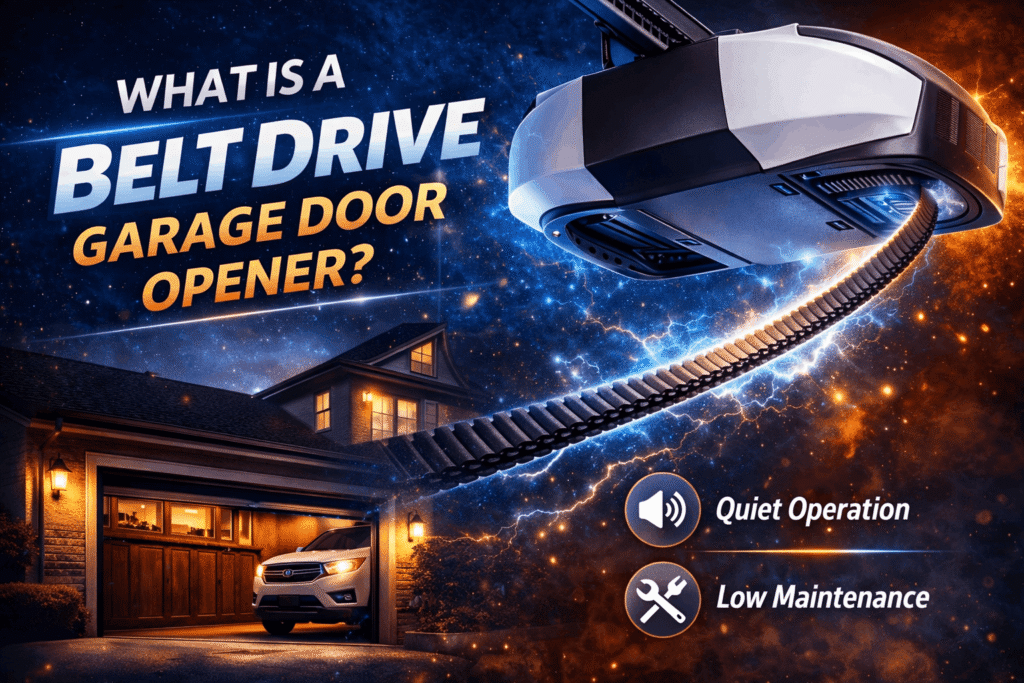
When comparing a belt drive vs. a chain drive garage door opener, a belt drive system is known for its quiet and smooth operation.
A belt-drive garage door opener uses a strong rubber or polyurethane belt instead of a metal chain to move the garage door along the track. The motor turns the belt, which pulls the door open and closed smoothly.
Why Homeowners Choose It
- Very quiet (ideal for attached garages)
- Smooth operation with less vibration
- Low maintenance (no regular lubrication needed)
- Long lifespan with proper care
What Is a Chain Drive Garage Door Opener?
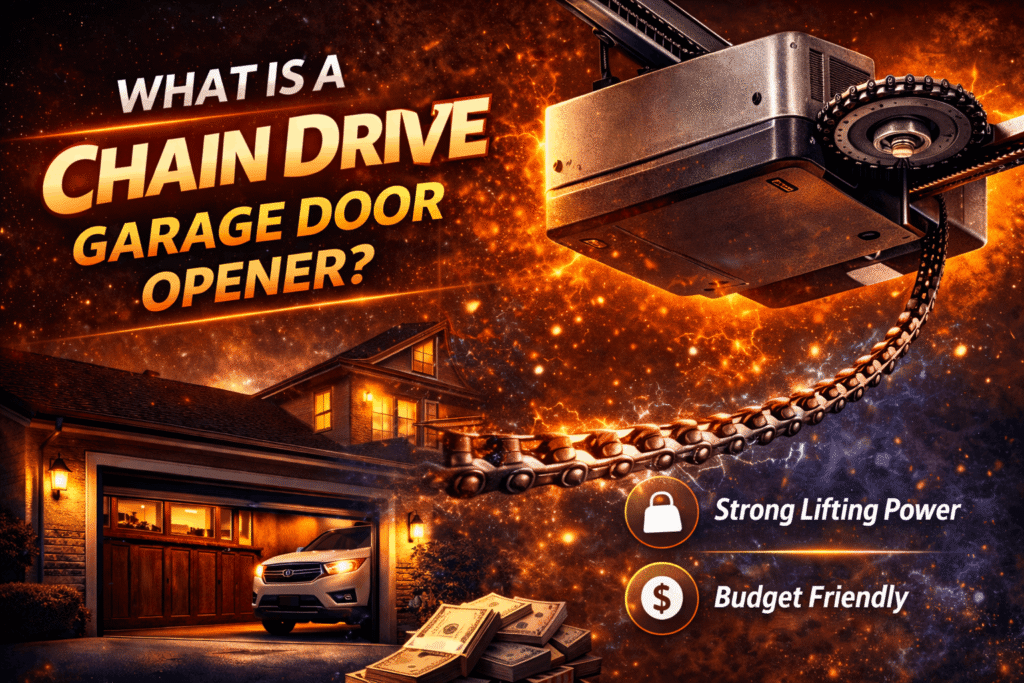
In the belt drive vs chain drive garage door opener comparison, a chain drive system is known for its strength and affordability.
A chain drive garage door opener uses a metal chain—similar to a bicycle chain—to move the garage door along the rail. When the motor runs, the chain pulls the trolley, which lifts or lowers the door.
Curious about the different types of garage door motors? Read our guide on Garage Door Opener Motor Types to choose the best one for your home.
Why Homeowners Choose It
- Budget-friendly option
- Very strong and durable
- Ideal for heavy or oversized doors
- Reliable and widely available
Noise Comparison: Which One Is Quieter?
One of the most noticeable distinctions between belt-drive and chain-drive garage door openers is how much noise they produce during operation.
New to garage door openers? Learn the basics in our guide on What Is a Garage Door Opener to make an informed choice.
Belt Drive: The Quieter Option
A belt drive opener uses a rubber or polyurethane belt, which moves smoothly along the rail. This reduces vibration and metal-on-metal contact, making it very quiet. It’s ideal for homes with attached garages or bedrooms above the garage.
Chain Drive: Louder Operation
A chain drive opener uses a metal chain. As the chain moves, it creates more vibration and noise. While it’s strong and reliable, it can be noticeably louder—especially in quiet neighbourhoods or at night.
Durability & Lifespan Comparison
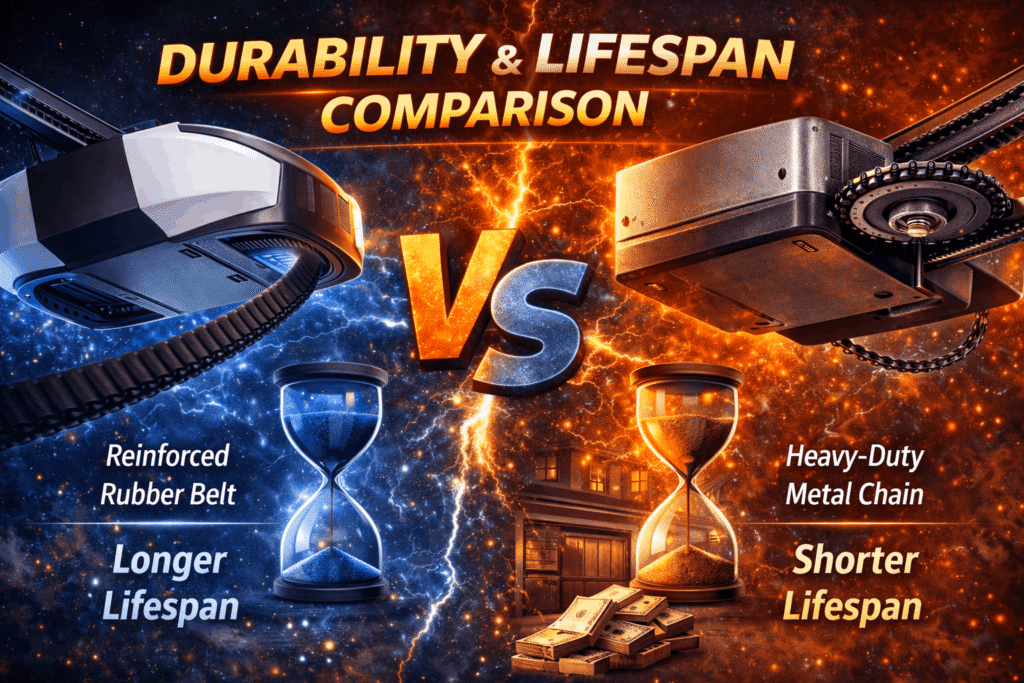
When deciding between a belt drive vs. chain drive garage door opener, durability and lifespan are key factors.
Want a complete breakdown of all garage door openers? Check out our Types of Garage Door Openers Comparison to find the right opener for your home.
Belt Drive: Long-Lasting with Less Wear
Belt drive openers use a flexible belt that creates less vibration and stress on moving parts. This smoother operation helps reduce wear over time, giving many belt drive systems a long lifespan with proper maintenance.
Chain Drive: Tough and Rugged
Chain drive openers are built with strong metal components that can handle heavy use and challenging conditions. They’re very durable, especially for heavy doors, but the added vibration can lead to faster wear on parts compared to belt drives.
Quick Comparison
- Belt drive: generally quieter with less vibration → often longer lasting
- Chain drive: extremely strong but more vibration → parts may wear sooner
Cost Comparison: Is Belt Drive Worth the Extra Money?
When comparing a belt drive vs. a chain drive garage door opener, cost is one of the first things most homeowners consider.
Chain Drive: More Budget-Friendly
Chain drive openers are typically less expensive upfront. The metal chain mechanism is simple, reliable, and widely used, which keeps the purchase price lower.
Belt Drive: Higher Initial Cost, Better Comfort
Belt drive openers usually cost more upfront because the belt system is quieter and creates less vibration. While the initial price is higher, the quieter operation and lower maintenance can be worth it for many homeowners.
Long-Term Value
- Chain drive: Lower purchase price, but can require more maintenance (like lubrication) over time.
- Belt drive: Higher upfront cost, but quieter operation with potentially lower upkeep.
Maintenance Requirements
When comparing a belt drive vs. a chain drive garage door opener, maintenance is an important factor to consider.
Want to understand how garage door openers work? Read our guide on How Does a Garage Door Opener Work to get all the details.
Belt Drive: Low Maintenance
Belt drive openers require minimal upkeep. The rubber or polyurethane belt does not need regular lubrication. Basic maintenance usually includes:
- Checking belt tension
- Inspecting for wear
- Cleaning the rail
Overall, belt drives are easier to maintain and require less routine service.
Chain Drive: Requires More Attention
Chain drive openers need periodic lubrication to keep the metal chain running smoothly. You may also need to:
- Adjust chain tension
- Tighten hardware
- Reduce vibration over time
Without proper maintenance, chain drives can become noisier and wear faster.
Best for Heavy Garage Doors?
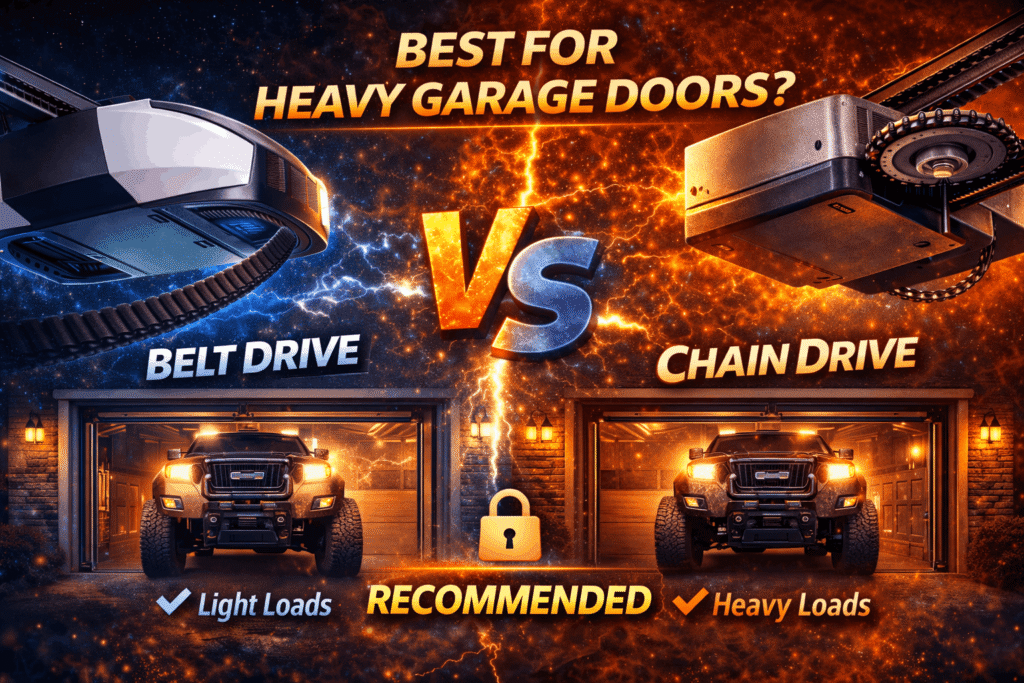
When comparing a belt drive vs. a chain drive garage door opener, strength matters—especially if you have a heavy garage door.Want to learn more about choosing the right power for your garage door? Check out our Garage Door Opener Horsepower Guide to find the perfect fit.
Chain Drive: Best for Heavy Doors
Chain drive openers use a metal chain that delivers strong, reliable power, making them well-suited for:
- Large wooden doors
- Heavy insulated doors
- Double garage doors
Their rugged design can handle higher weight without struggling.
Belt Drive: Still Capable, But With Limits
Belt drive openers are strong and smooth, but in some cases, they may not perform as powerfully as a chain drive on very heavy doors. They work well for most residential doors, but for maximum strength, chain drives often have the edge.
Pros and Cons
Belt Drive Garage Door Opener
Pros
- Very quiet operation
- Smooth, low-vibration performance
- Low maintenance
- Long lifespan
Cons
- Higher upfront cost
- Slightly less rugged for extremely heavy doors
Chain Drive Garage Door Opener
Pros
- Strong and durable
- Affordable upfront cost
- Handles heavy doors well
Cons
- Noisier operation
- Requires periodic maintenance
Expert Recommendation: Which Should You Choose?
When deciding between a belt drive vs. chain drive garage door opener, the best choice depends on your priorities and garage setup.Still unsure about the right opener? Check out our guide on What Size Garage Door Opener Do I Need to make the perfect choice for your garage
Choose a Belt Drive. If:
- You want quiet operation (especially for attached garages).
- You value smooth, low-vibration performance.
- You prefer low maintenance.
- Noise reduction is important (e.g., bedrooms above garage).
Choose a Chain Drive. If:
- Budget is a top concern.
- You have a heavy or oversized garage door.
- Strength and rugged performance matter most.
- Noise level is less of a priority
Conclusion
When deciding between a belt drive vs. chain drive garage door opener, it comes down to quiet comfort vs. strength and affordability.
- Belt Drive: Quiet, smooth, low-maintenance – ideal for attached garages.
- Chain Drive: Strong, durable, budget-friendly – best for heavy doors.
FAQs
1. Is a belt drive better than a chain drive?
Answer: Belt drive openers are quieter and smoother, while chain drive openers are stronger and more affordable. The best choice depends on your priorities.
2. How long does a belt-drive garage door opener last?
Answer: With proper maintenance, belt drive openers typically last 15–20 years.
3. Are chain drive garage door openers outdated?
Answer: No. Chain drive openers are still widely used because they are strong, durable, and budget-friendly.
4. Which opener is strongest?
Answer: Chain drive openers are generally stronger and better for heavy or oversized doors.
5. Do belt drives require maintenance?
Answer: Belt drives require minimal maintenance—mostly checking belt tension and inspecting for wear.